Buyer's guide
How to Choose an Eye Supplement After 40
Start by asking your eye doctor whether you need one. If you have intermediate or late AMD, look for a label that matches the AREDS2 doses. For any eye vitamin, check that every amount is listed, skip beta-carotene if you smoke or used to, and avoid ads that promise to bring back vision. VisiFlora lists an amount for zinc only.
Written by the VisiFlora editorial teamUpdated
Step zero
Do you need an eye supplement at all?
Most people without AMD do not, based on current evidence. The AREDS and AREDS2 formulas helped only people with intermediate or late AMD, and showed no benefit for early AMD or healthy eyes (NEI: who AREDS supplements help).
So the first step is not a store aisle. It is a dilated eye exam and one question for your eye doctor: "Do I have AMD, and if so, what stage?" The American Academy of Ophthalmology also advises talking with an ophthalmologist before buying eye vitamins (AAO: what's in your eye vitamins).
If you have never had an exam, our eye health guide lists the schedule by age.
Label reading
How do you read an eye-vitamin label?
Six checks, in the order you would do them with the bottle in your hand.
Find the Supplement Facts panel
No panel, no purchase. Without it you cannot tell what one serving contains.
Read the serving size
Amounts are per serving. A two-capsule serving holds twice what one capsule does.
Check every amount
Vitamins and minerals with a Daily Value must be listed with their own amounts (FDA: Supplement Facts and proprietary blends).
Look for a "proprietary blend"
A blend may show only its total weight, so you cannot see how much of each herb is inside (FDA: Supplement Facts and proprietary blends).
Smokers: look for beta-carotene
The original AREDS formula with beta-carotene is not recommended for current or former smokers (NEI: AREDS and AREDS2 formula doses).
Add up your zinc
Count zinc from every product you take. The adult upper limit is 40 mg a day (NIH ODS: zinc).
Side by side
How does an eye-vitamin label compare with AREDS2?
Put the AREDS2 doses next to the label you are holding. The last column shows what the VisiFlora sales page publishes.
A label matches AREDS2 only if every one of these amounts is listed and close to the trial dose. Many store eye vitamins have lower doses or extra ingredients (AAO: what's in your eye vitamins).
| Nutrient | AREDS2 daily dose | What to check on a label | VisiFlora (sales page) |
|---|---|---|---|
| Lutein | 10 mg | A stated amount near 10 mg | Not published |
| Zeaxanthin | 2 mg | A stated amount near 2 mg | Not published |
| Vitamin C | 500 mg | Amount per serving | Not published |
| Vitamin E | 400 IU | Amount per serving | Not published |
| Zinc | 80 mg | Amount, and your total from all products | 11 mg |
| Copper | 2 mg | Present when zinc is high | Not published |
| Beta-carotene | None | Smokers and ex-smokers should avoid it | Listed; amount not published |
AREDS2 doses from NEI (NEI: AREDS and AREDS2 formula doses). VisiFlora details from its sales page (Sales page, tryvisiflora.com). Because its amounts are missing, VisiFlora cannot be called an AREDS2 formula.
Dose check
What can you measure on the VisiFlora label today?
Only zinc. The other bars stay empty until amounts are published.
At 11 mg, VisiFlora's zinc equals the adult male RDA and sits far under the 40 mg upper limit (NIH ODS: zinc). For lutein, zeaxanthin and astaxanthin, there is nothing to draw. Read the full list on what the label lists.
Fine print
What does a proprietary blend hide?
The amount of each ingredient inside it. FDA allows a Supplement Facts panel to group ingredients as a "proprietary blend" and give only the blend's total weight, with the ingredients listed from most to least by weight (FDA: Supplement Facts and proprietary blends).
That rule protects a recipe, but it leaves you guessing. Vitamins and minerals with a Daily Value still need their own amounts, even next to a blend (FDA: Supplement Facts and proprietary blends).
If an eye vitamin's key ingredients sit inside a blend, you cannot compare them with any study dose.
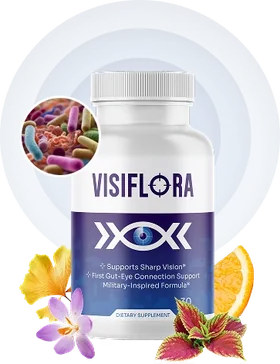
Try VisiFlora for 60 days1 capsule a day with food · from $49 a bottle · free U.S. shipping on 3 or 6 bottles
Order nowSpot the pitch
What are the red flags in eye-supplement ads?
FDA and FTC warnings, applied to eye products. One flag is a reason to slow down; several are a reason to walk away.
One product for every eye problem
FDA lists one-product-does-it-all claims as a health-fraud warning sign (FDA: 6 tip-offs to health scams).
Stories instead of studies
Testimonials are never enough to back a health claim; claims need controlled human trials (FTC: health product advertising rules).
Vision "restored" fast
In 2005 the FTC fined a seller over claims of restoring vision lost to AMD and eliminating floaters (FTC: 2005 eye supplement settlement).
Countdowns and "today only"
Pressure to buy now leaves no time to ask your eye doctor. A real offer can wait a day.
Big numbers, no citation
A percentage or a study size with no link you can open is not evidence.
Reviews you cannot check
The FTC banned fake reviews in a rule announced August 14, 2024, and says fakes can be hard to spot (FTC: fake reviews rule) (FTC: how to evaluate online reviews).
The VisiFlora sales page and its upsell page make large claims for single ingredients without citing any study (Sales page, tryvisiflora.com), and the upsell page uses a countdown. We do not repeat those claims here. More in our article on eye supplement red flags.
Medicines
Which medicines should you check before starting an eye supplement?
Blood thinners and diabetes medicines first, then everything else. Supplements can interact with medicines, so tell your doctor and pharmacist about every one you take (NCCIH: using supplements wisely).
- Ginkgo, common in eye blends, may raise bleeding risk with warfarin and other blood thinners (NCCIH: ginkgo).
- Alpha-lipoic acid may lower blood sugar and add to diabetes medicines, and may counteract chemotherapy or radiation (MSK: alpha-lipoic acid cautions).
- Zinc at 50 mg or more a day for a long time can lower copper (NIH ODS: zinc).
VisiFlora lists ginkgo and alpha-lipoic acid. The full table is on the side effects page.
Honest fit
Where does VisiFlora fit among eye supplements?
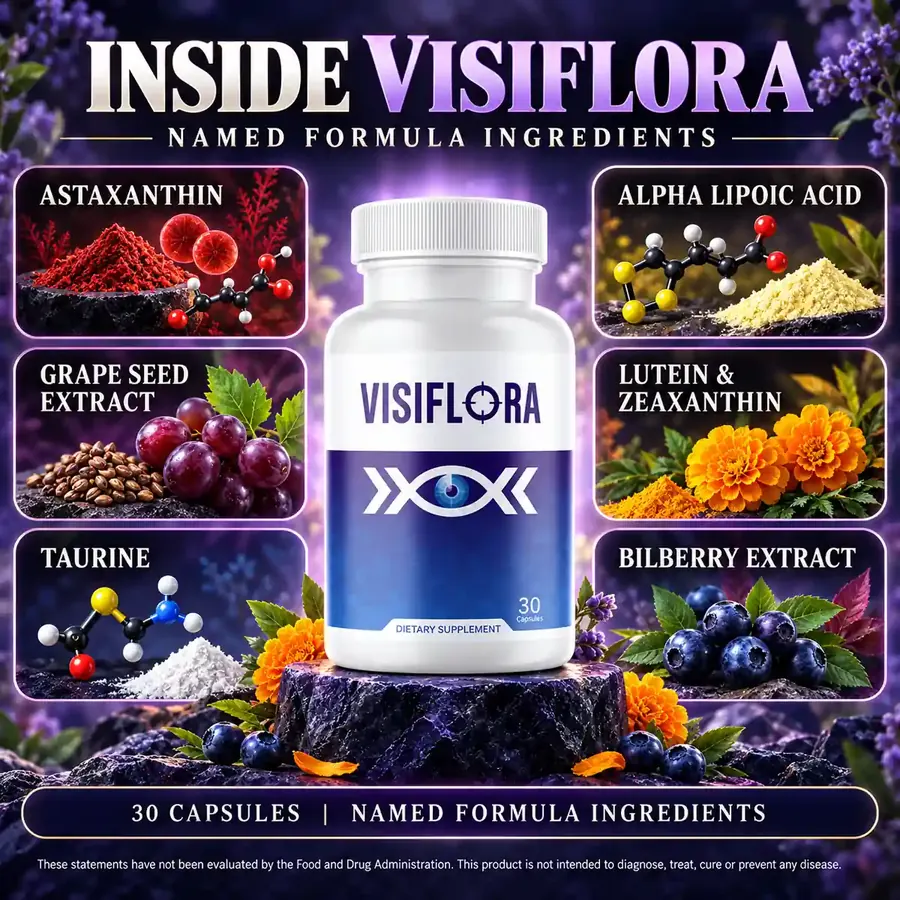
As an add-on with unknown amounts, not as an AREDS2 replacement. VisiFlora names 21 ingredients and publishes a dose for zinc only (Brand advertorial, ACCESS Newswire).
In its favor: one capsule a day with food, every claimed ingredient is named, zinc sits at a modest everyday amount, and the 60-day window counts from delivery. Against it: no panel, no trial of the product, and no named maker.
Bring the bottle to your next exam and ask your eye doctor whether it fits your plan.
FAQ
Questions about choosing an eye supplement
What should I look for in an eye supplement?
Look for a full Supplement Facts panel with an amount for every ingredient, doses that match the research for your situation, and no beta-carotene if you smoke or used to. Skip products that promise to bring back vision. Ask your eye doctor whether you need one at all.
How much lutein should an eye vitamin have?
The AREDS2 formula used 10 mg of lutein and 2 mg of zeaxanthin a day (NEI: AREDS and AREDS2 formula doses), and that dose was tested in people with intermediate or late AMD. For diet, one review suggests about 6 mg a day, while most people eat only 1 to 3 mg (Review: lutein and zeaxanthin in foods).
Is a proprietary blend a bad sign?
Not always, but it limits what you can check. A blend may list only its total weight, so the amount of each ingredient stays hidden (FDA: Supplement Facts and proprietary blends). For eye vitamins, where research doses matter, a blend makes it hard to compare a label with any study.
Can I take two eye vitamins at the same time?
Ask your doctor first, and add up the overlap. Zinc is the main concern: the adult upper limit is 40 mg a day, and 50 mg or more long term can cause low copper (NIH ODS: zinc). Doubling up also doubles any herb that interacts with medicines.
Why does beta-carotene matter for smokers?
The original AREDS formula with 15 mg of beta-carotene is not recommended for current or former smokers, which is why AREDS2 left it out (NEI: AREDS and AREDS2 formula doses). VisiFlora lists beta-carotene without an amount, so smokers and ex-smokers should ask their eye doctor before taking it.
Are store eye vitamins the same as AREDS2?
Often not. When researchers compared products from the top five eye-vitamin brands, only some matched the AREDS or AREDS2 doses; others had lower doses or extra ingredients (AAO: what's in your eye vitamins). Compare each amount on the label with the AREDS2 doses before you assume a match.
Should I take VisiFlora if I have intermediate AMD?
Ask your eye doctor about an AREDS2 formula first. That is the formula with trial results for intermediate AMD (NEI: who AREDS supplements help). VisiFlora publishes no lutein, zeaxanthin, vitamin C, vitamin E or copper amounts, so no one can tell whether it comes close to those doses.
Who wrote this
Written and reviewed by
Plain-language pages built from what the seller publishes and from linked eye-health sources.
Last updated . Read our editorial standards and how we check reviews. This website is run by a USA authorized VisiFlora retailer, not by the manufacturer. We earn money when you buy through our order links.
Keep reading
More about VisiFlora
Eye health guide
Exams by age, urgent warning signs, AREDS2, foods and screen habits: the eye care steps with the strongest evidence.
Read moreWhat the label lists
No Supplement Facts panel is published. Here is what the seller lists, what is missing, and how to check your bottle.
Read moreSide effects
Which VisiFlora ingredients carry known cautions, which medicines to check, and what to do if you feel unwell.
Read moreUSA authorized VisiFlora retailer
Ready to try VisiFlora?
Pick a pack. Every pack covers at least the 60-day money-back window at one capsule a day.
- Secure BuyGoods checkout
- 60-day money-back window
- Ships from the U.S. with tracking