Eye health guide
Eye Health Guide for Adults Over 40
The steps that protect eyesight best are regular dilated eye exams, not smoking, UV-blocking sunglasses, and a diet with leafy greens and fish. After 40, get a baseline exam, then follow the schedule for your age. The AREDS2 formula helps only people with intermediate or late AMD. A capsule like VisiFlora is an add-on at most.
Written by the VisiFlora editorial teamUpdated
Ranked by evidence
What protects your eyesight most after 40?
Exams come first. Habits come next. Single supplements come last.
Dilated eye exams protect your sight more than anything you can buy. They catch glaucoma and diabetic eye disease, which often cause no symptoms early on (NEI: glaucoma) (NEI: diabetic retinopathy).
Dilated eye exams on schedule
StrongFinds glaucoma and diabetic eye disease before you notice symptoms. (NEI: everyday ways to keep eyes healthy) (AAO: how often adults need eye exams)
AREDS2 formula, if you have intermediate AMD
StrongCut the risk of advanced AMD by about 25% over five years, in that group only. (NEI: who AREDS supplements help) (Cochrane: antioxidants for slowing AMD)
Not smoking
GoodOne of NEI's core steps for keeping eyes healthy. (NEI: everyday ways to keep eyes healthy)
UV-blocking sunglasses
GoodNEI advises lenses that block 99-100% of UVA and UVB. (NEI: everyday ways to keep eyes healthy)
Leafy greens, eggs and fish
GoodKale and spinach are top lutein sources; diet is the everyday route. (Review: lutein and zeaxanthin in foods) (NEI: everyday ways to keep eyes healthy)
20-20-20 breaks for screens
GoodEvery 20 minutes, look 20 feet away for 20 seconds; screen strain usually eases with rest. (AAO: screen time and eye strain tips)
Single ingredients (astaxanthin, bilberry)
WeakSmall or negative studies: bilberry failed rigorous night-vision trials. (Review: astaxanthin and the eye) (Systematic review: bilberry and night vision)
VisiFlora itself
No trialsNo published study; amounts are not published, so nothing can be compared. (FTC: health product advertising rules) (Brand advertorial, ACCESS Newswire)
Bar length shows how much published evidence supports each step for protecting your sight, based on the eye-health sources linked here. A reading aid, not a score from any one source.
Exam schedule
How often should adults get an eye exam?
For adults with no symptoms or risk factors, the American Academy of Ophthalmology suggests this schedule.
Start with a baseline exam at 40, then go more often as you age. Some groups need exams sooner.
| Who | How often | Source |
|---|---|---|
| Age 40 | One baseline comprehensive exam | (AAO: how often adults need eye exams) |
| Ages 40 to 54 | Every 2 to 4 years | (AAO: how often adults need eye exams) |
| Ages 55 to 64 | Every 1 to 3 years | (AAO: how often adults need eye exams) |
| Age 65 and older | Every 1 to 2 years, even without symptoms | (AAO: how often adults need eye exams) |
| Over 60, African American over 40, or family history of glaucoma | Dilated exam every 1 to 2 years | (NEI: glaucoma) |
| Anyone with diabetes | Dilated exam at least once a year | (NEI: diabetic retinopathy) |
More on timing in our article on the eye exam schedule by age.
Act now
Which eye symptoms need care right away?
A sudden increase in floaters, flashes of light, or a shadow or curtain across part of your vision. These can signal retinal detachment, which NEI treats as a medical emergency (NEI: urgent warning signs).
Call an eye doctor or go to an emergency room the same day. No supplement belongs in that plan.
Know the names
What are the common eye conditions after 40?
Five conditions that become more common with age, and what actually helps each one.
| Condition | What it is | Early signs | What helps |
|---|---|---|---|
| Macular degeneration (AMD) | Damage to the macula, the center of the retina | Blurry central vision | Exams; AREDS2 for intermediate or late AMD (NEI: AMD basics) (NEI: who AREDS supplements help) |
| Cataract | A cloudy area in the lens | Cloudy or dim vision | Surgery is the only way to remove one (NEI: cataracts) |
| Glaucoma | Damage to the optic nerve | Usually none early | Dilated exams; treatment can stop it getting worse (NEI: glaucoma) |
| Diabetic retinopathy | Damage to retinal blood vessels from diabetes | Usually none early | Yearly dilated exam; blood sugar in range (NEI: diabetic retinopathy) |
| Dry eye | Too few tears, or tears that do not work well | Scratchy, burning, red eyes | Artificial tears for mild cases; see a doctor if it lasts (NEI: dry eye) |
Macular degeneration
What is macular degeneration, and who is at risk?
AMD is damage to the macula, the small part of the retina you use for reading and faces. It blurs central vision. People 55 and older are more likely to have it (NEI: AMD basics).
AMD does not cause complete blindness, because side vision stays. There is no treatment yet for late dry AMD, which is why early detection matters (NEI: AMD basics).
Your eye doctor can tell you which stage, if any, you have. That answer decides whether AREDS2 makes sense.
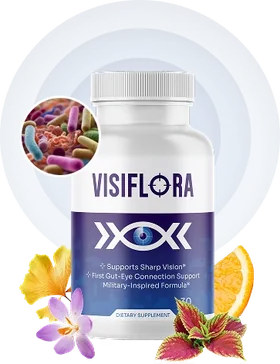
Try VisiFlora for 60 days1 capsule a day with food · from $49 a bottle · free U.S. shipping on 3 or 6 bottles
Order nowAREDS2
Who does the AREDS2 formula help?
Only people who already have intermediate or late AMD. In that group, the AREDS and AREDS2 formulas lowered the risk of advanced AMD by about 25% over five years. People with early AMD or no AMD saw no benefit (NEI: who AREDS supplements help).
- AREDS2 doses: vitamin C 500 mg, vitamin E 400 IU, zinc 80 mg, copper 2 mg, lutein 10 mg, zeaxanthin 2 mg (NEI: AREDS and AREDS2 formula doses).
- It leaves out beta-carotene, which the original AREDS formula used; that older formula is not advised for current or former smokers (NEI: AREDS and AREDS2 formula doses).
- Vitamin E or beta-carotene alone do not stop AMD from starting (Cochrane: antioxidants do not prevent AMD).
- Lutein and zeaxanthin alone showed little or no effect on progression (Cochrane: antioxidants for slowing AMD).
NEI states plainly that nutritional supplements cannot prevent AMD (NEI: who AREDS supplements help).
On your plate
Which foods give your eyes lutein and zeaxanthin?
Dark leafy greens, corn and eggs. Kale, spinach and parsley are among the richest lutein sources, and lutein from eggs is absorbed especially well (Review: lutein and zeaxanthin in foods).
Most people eat about 1 to 3 mg a day, well under the suggested 6 mg (Review: lutein and zeaxanthin in foods). A single cup of cooked spinach has about 29.8 mg of lutein plus zeaxanthin (Linus Pauling Institute: carotenoids). NEI also suggests fish rich in omega-3s (NEI: everyday ways to keep eyes healthy).
Food is the everyday route. Read the lutein and zeaxanthin profile.
Screens
How can you ease screen eye strain?
Take regular breaks and blink more. People blink about a third to a half less when they look at screens, which dries the eyes. The 20-20-20 rule helps: every 20 minutes, look at something 20 feet away for 20 seconds (AAO: screen time and eye strain tips).
Screen eyestrain usually goes away with rest. If your eyes stay dry, scratchy or blurry, see an eye doctor, because dry eye is more common after 50 and in heavy screen users (NEI: dry eye).
Supplements
Where does an eye supplement like VisiFlora fit?
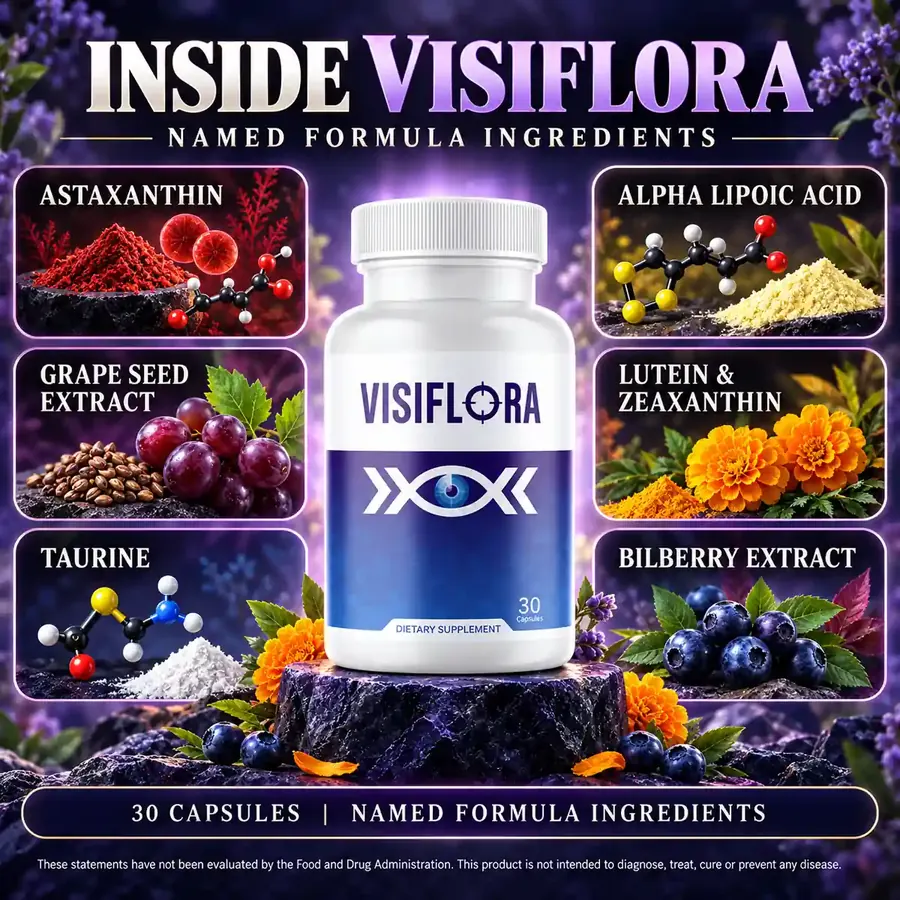
After exams and habits, and only with your eye doctor's knowledge. VisiFlora publishes an amount for zinc only (11 mg), so it cannot be compared with AREDS2 or any studied dose (Brand advertorial, ACCESS Newswire).
Be wary of any eye product, this one included, that promises to bring back lost vision. FDA lists one-product-does-it-all claims, testimonials and quick fixes as health-fraud red flags (FDA: 6 tip-offs to health scams). In 2005 the FTC fined a lutein supplement seller over claims about restoring vision lost to AMD (FTC: 2005 eye supplement settlement).
Read our guide to choosing an eye supplement, and check the medicine cautions if you take blood thinners or diabetes medicine.
FAQ
Eye health questions for adults over 40
How often do adults over 65 need an eye exam?
Every 1 to 2 years, even without symptoms, according to the American Academy of Ophthalmology (AAO: how often adults need eye exams). Anyone with diabetes should have a dilated exam every year (NEI: diabetic retinopathy). Your eye doctor may suggest more visits if you have glaucoma risk or AMD.
What are the first signs of macular degeneration?
Blurry or fuzzy central vision is the main sign, such as trouble reading or seeing faces (NEI: AMD basics). Early AMD often has no symptoms at all, which is why a dilated exam matters.
Do eye vitamins stop AMD from starting?
No. NEI states that nutritional supplements cannot prevent AMD (NEI: who AREDS supplements help), and large trials found vitamin E or beta-carotene do not stop it from starting (Cochrane: antioxidants do not prevent AMD). The AREDS2 formula helps only people who already have intermediate or late AMD.
Is the AREDS2 formula safe for smokers?
AREDS2 was designed without beta-carotene, because the original AREDS formula with 15 mg of beta-carotene is not recommended for current or former smokers (NEI: AREDS and AREDS2 formula doses). If you smoke or used to, check any eye vitamin label for beta-carotene and ask your eye doctor first.
Are floaters a sign of something serious?
A few long-standing floaters are common, but a sudden increase in floaters, flashes of light or a shadow over your vision can signal retinal detachment (NEI: urgent warning signs). That is a medical emergency. See an eye doctor or go to an emergency room right away.
Is surgery the only fix for cataracts?
Yes. NEI says surgery is the only way to get rid of a cataract, and about 9 in 10 people see better afterward (NEI: cataracts). The AREDS supplements had no effect on cataract (NEI: AREDS and AREDS2 formula doses).
What helps dry eyes after 50?
For mild dry eye, over-the-counter artificial tears may help, and screen breaks reduce drying (NEI: dry eye) (AAO: screen time and eye strain tips). Dry eye is more common after 50, in women and in contact lens users. If your eyes stay scratchy, red or blurry, see an eye doctor.
Who wrote this
Written and reviewed by
Plain-language pages built from what the seller publishes and from linked eye-health sources.
Last updated . Read our editorial standards and how we check reviews. This website is run by a USA authorized VisiFlora retailer, not by the manufacturer. We earn money when you buy through our order links.
Keep reading
More about VisiFlora
Choosing an eye supplement
Read an eye-vitamin label, compare it with AREDS2, spot red flags and see where VisiFlora fits, without brand ratings.
Read moreEye health guides
All our eye health guides in one place: exams by age, warning signs, AREDS2, labels and where a capsule fits.
Read moreSide effects
Which VisiFlora ingredients carry known cautions, which medicines to check, and what to do if you feel unwell.
Read moreUSA authorized VisiFlora retailer
Ready to try VisiFlora?
Pick a pack. Every pack covers at least the 60-day money-back window at one capsule a day.
- Secure BuyGoods checkout
- 60-day money-back window
- Ships from the U.S. with tracking